If you buy a gift for someone and they don’t take it, who does the gift belong to?
It’s obvious: the person who bought it.
That wasn’t a trick question, but it is the start of a parable – and it has nothing to do with gifts.
As Buddha went on to say, “It’s the same with your anger. If you become angry with me and I don’t feel insulted nor accept your hostility, the anger falls back on you, as it was initially yours to give. You are then the only one who becomes unhappy, not me. All you’ve done is hurt yourself.”
It’s a philosophy we should all live by.
Feedback may be a gift. Criticism isn’t.
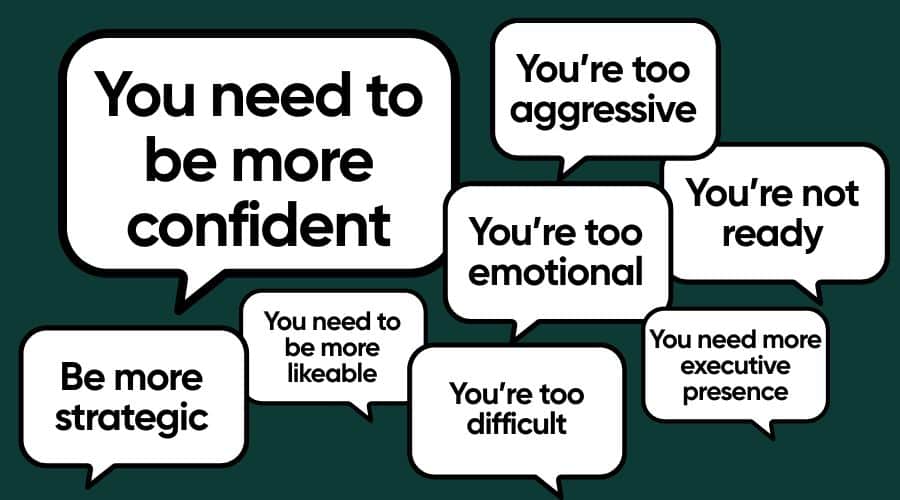
Quite frankly, we’re sick of Powrsuiters sharing the ridiculous feedback criticism they’ve taken on. ‘You lack executive presence’, ‘you need to be more confident’, ‘you’re not ready’.
Yes, these are all real examples. No, they’re not isolated. Whenever we ask a room full of women whether they’ve been told they lack confidence, more than half raise their hands.
Statements like these are often made flippantly and forgotten just as fast. Meanwhile, they lodge with the recipient’s brain for years – decades even. We know. We spend an awful lot of time undoing the damage.
As you can probably tell, it really pisses us off.
It gets worse online
Direct comments are only part of the problem, because criticising people has never been easier. A frustrated post, strongly worded email, one-star Google review. Keyboard warriors don’t just dwell in their mother’s basements; plenty are ‘well-meaning’ professionals who proudly share their unsolicited opinions.
Last week we watched it happen again when a volunteer-led event for mothers immediately attracted a negative comment on LinkedIn. The commenter wasn’t a woman, or a mother.
Once we’d worked through our boiling perimenopausal rage, it gave us an idea: it’s about time we drew a clear line between feedback and criticism. Yes, hopefully we’ll stop a manager or two from causing damage to someone they’re paid to support. But mostly, this one’s for you – the people on the receiving end. Because you too can take a leaf out of Buddha’s book, and leave that criticism exactly where it belongs: with the person who tried to palm it off on you.
What’s the difference?
To be clear, feedback shouldn’t be all heart emojis and high fives. If it were, we wouldn’t have spent the last couple of weeks glued to the Commonwealth Games. Without honest, constructive feedback, our athletes would pole vault about as well as we do. We can’t pole vault.
Work is no different. Quality feedback can be a hard pill to swallow, but it’s also how we course-correct. However, there is a difference between feedback that helps and criticism that hurts, and it comes down to three factors:
1. Intent
Feedback exists to help you improve. That’s the whole motivation. Not to vent, not to get you to conform, not to offload frustration – your success is the only goal.
2. Specificity
How exactly does someone become “more confident”? What does “ready” actually look like? If feedback can’t be turned into action, it isn’t feedback. It’s just an unhelpful burden.
3. Privacy
Praise belongs in public, but the tough stuff doesn’t need an audience. Not convinced? Refer to point one: when has raising an issue publicly ever been about the other person’s best interests?
Return to sender
When a remark stabs like a knife, pause. Even helpful feedback can sting – here are some helpful tips for short-circuiting your defensive instincts. Take a breath, then ask yourself ‘can I do anything about this?’ If you’re unsure, you’re entitled to ask for specifics: what exactly did they notice, and what exactly do they think you should do about it?
If answers aren’t forthcoming, then be like Buddha. Politely decline this particular unwanted gift, and leave it with the giver. You don’t even need to reject it out loud – like the ill-fitting jumper your grandma gave you for Christmas, you can casually discard it without them even noticing.
Procrastination: Stop stalling, start doing We all put off important stuff, even though we know it’ll come back to bite us. We all do it, we’re all aware we do it, and we all seem unable to kick the habit despite knowing how irrational it…